A Day in the Life of a Real Estate Agent
Showings, offer deadlines and escrow follow-ups shape the hours — here is how a licensed agent's workday actually breaks down, task by task.

By Lena KowalczykOct 28, 2026 · 9 min read
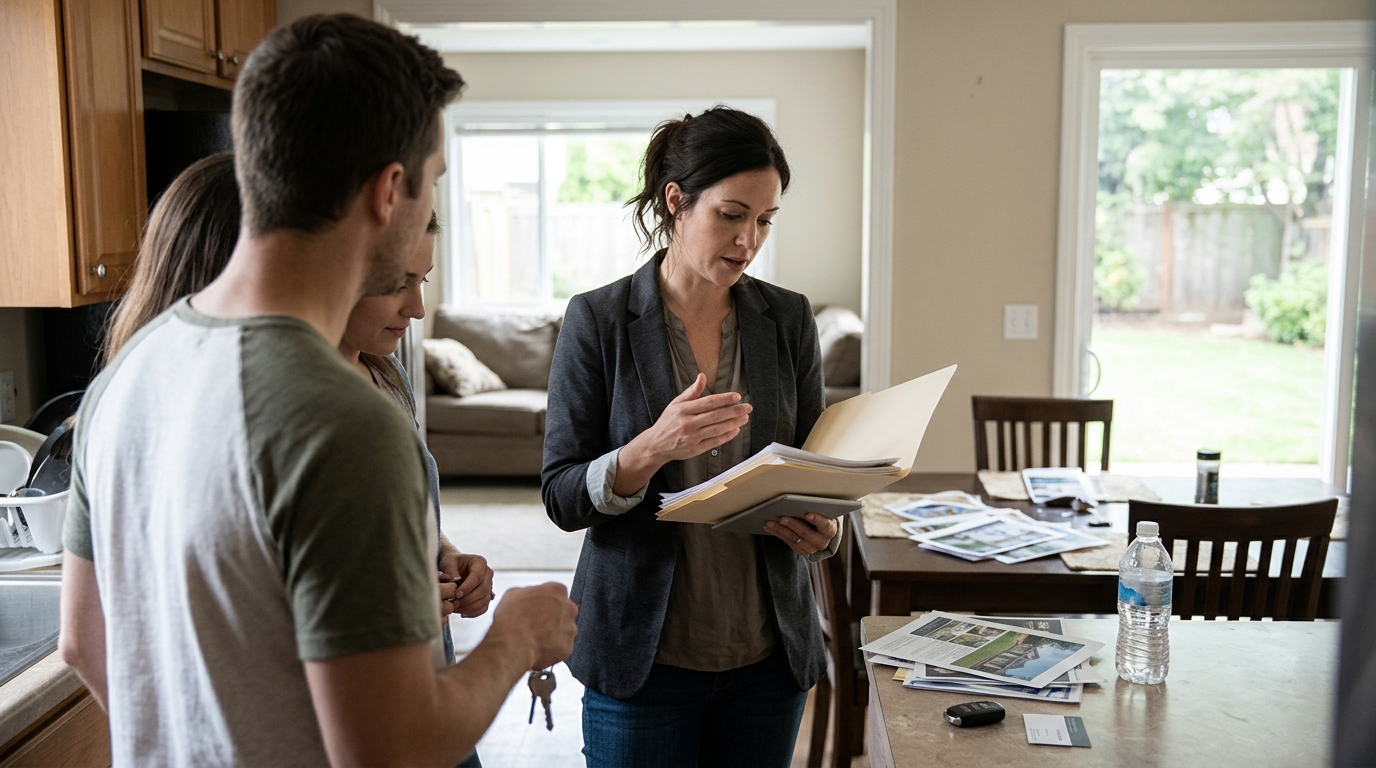
A real estate agent's day is built around other people's schedules: sellers who can only meet before work, buyers who can only tour after 6 p.m., and lenders, inspectors and escrow officers who need something before a closing date. Between appointments sits desk work — pulling comparable sales, writing offers, loading listings into the MLS and chasing signatures.
Most brokers and sales agents work full time, and some work more than 40 hours per week, with schedules that often include evenings and weekends (U.S. Bureau of Labor Statistics, 2025). Income comes mostly from commissions, often split among the buying agent, selling agent, brokers and firms (U.S. Bureau of Labor Statistics, 2025), so the day is as much about building the next deal as closing the current one.
Hour-by-Hour: A Typical Shift
This is a composite day, assembled from duties common to residential sales agents in the US. Your hours shift with your market, your brokerage and how many active clients you have.
7:30 a.m. – 8:15 a.m. — Hotsheet and inbox You run the overnight MLS hotsheet — new listings, price cuts, pendings and solds in your buyers' ZIP codes — reply by text to portal leads that came in at 11 p.m., and log each one in your CRM with a follow-up date.
8:15 a.m. – 9:00 a.m. — Brokerage meeting The weekly sales meeting with your managing broker and other agents, in the office or on Zoom, listed as a hot technology for this occupation (O*NET OnLine, U.S. Department of Labor). Agenda: coming inventory, a file stalled in underwriting, advertising compliance.
9:00 a.m. – 10:30 a.m. — Listing appointment At a seller's kitchen table you present a comparative market analysis built from MLS data and Realtors Property Resource (RPR), a database listed among this occupation's tools (O*NET OnLine). You advise on price, repairs and market conditions — a core duty of the job (U.S. Bureau of Labor Statistics, 2025) — then walk the sellers through the listing agreement and disclosures.
10:45 a.m. – 12:00 p.m. — Buyer showings Three houses with a buyer client: lockboxes opened through the association's showing app, condition issues photographed on your phone, HOA documents discussed in the driveway. This is the physical stretch — stairs, basements, crawl space hatches and 40 minutes of driving between stops, in whatever weather the day brings.
12:00 p.m. – 12:45 p.m. — Lunch and prospecting calls You eat in the car and work your CRM call list: past clients, an expired listing, a lender referral. Soliciting potential clients is part of the job (U.S. Bureau of Labor Statistics, 2025).
1:00 p.m. – 2:30 p.m. — Writing and presenting an offer You draft a purchase offer in your brokerage's forms platform, send it for e-signature and present it to the listing agent for the sellers — presenting purchase offers is a listed task (O*NET OnLine). A counteroffer lands at 2:10 and you read it line by line to your buyer by phone.
2:30 p.m. – 3:30 p.m. — Transaction coordination Four calls on a file under contract: the escrow officer about a missing payoff, the lender about the appraisal date, the home inspector about a roof re-inspection, the pest control operator about a treatment certificate. Conferring with those parties so purchase agreement terms are met before closing is a listed task (O*NET OnLine).
3:30 p.m. – 5:00 p.m. — Listing launch You input the morning's listing into the MLS, upload the photographer's images, schedule advertisements and set Saturday's open house — promoting properties through advertisements, open houses and multiple listing services is a defined part of the role (O*NET OnLine).
5:30 p.m. – 7:00 p.m. — Evening tour and video walkthrough A buyer who works days tours two homes after 5. Then a live FaceTime walkthrough for an out-of-state relocating client; video conferencing software is listed technology for this occupation (O*NET OnLine).
7:30 p.m. – 8:15 p.m. — Negotiation and wrap-up A repair-request negotiation goes back and forth by text with the other agent until both sides accept a credit; mediating negotiations is part of the job (U.S. Bureau of Labor Statistics, 2025). You update the CRM and send the sellers a showing-feedback summary. This is the satisfying part: a deal that was dead at 7:30 is alive at 8:10.
Core Responsibilities Beyond the Clock
- Weekly open house (usually weekends): signs set, visitors captured on a sign-in register and entered into your CRM — the deliverable is a named prospect list with follow-up tasks.
- Weekly seller report: a written update to each listing client with showing counts, agent feedback and competing solds, ending in a clear hold-or-reduce recommendation.
- Weekly pipeline review with your managing broker: every active file checked against its contract dates so no inspection or financing deadline slips.
- Monthly database marketing: a market-update email and a just-listed or just-sold mailer to your sphere, measured in appointments booked.
- Monthly bookkeeping: most real estate sales agents are self-employed (U.S. Bureau of Labor Statistics, 2025), so you reconcile marketing spend, mileage, MLS and association dues and set money aside for taxes, ideally on a system a tax professional sets up.
- Quarterly goal reset: a written target for listing appointments and buyer consultations, since commissions are split among the agents, brokers and firms involved and arrive only at closing (U.S. Bureau of Labor Statistics, 2025).
- Seasonal listing prep: in many markets late winter is spent booking photographers, stagers and pre-listing inspections for spring launches.
- License renewal every 2 to 4 years: state licenses typically renew on that cycle and most states require continuing education (U.S. Bureau of Labor Statistics, 2025). Deliverable: CE certificates filed before your state's deadline.
Who Tends to Thrive in This Role
Self-motivation is the first requirement, and it shows in the unassigned parts of the day: the 7:30 a.m. hotsheet review and the 12:00 p.m. prospecting calls have no supervisor checking them, yet they fill next quarter's calendar. Most sales agents are self-employed and work with little supervision, and the BLS names self-motivation, business, interpersonal, organizational and problem-solving skills as important qualities here (U.S. Bureau of Labor Statistics, 2025).
Organization keeps the 2:30 p.m. coordination hour from becoming a crisis — four parties, three deadlines, one file — and carries the 3:30 p.m. listing launch, where photos, MLS input and advertising all have to land before Saturday's open house.
Comfort with blunt conversations matters more than polish. At the 9:00 a.m. listing appointment you may have to tell sellers the comparable sales in RPR do not support their price, then at 7:30 p.m. hold a position on a repair credit while an anxious client waits on the phone.
Stamina and schedule flexibility are non-negotiable: the 10:45 a.m. showing block is stairs, driving and weather, and the 5:30 p.m. tour exists only because buyers work days.
Finally, tolerance for uneven income. Nothing in this day pays on the day it happens; money arrives at closing as a split commission (U.S. Bureau of Labor Statistics, 2025). People who last treat the 1:00 p.m. offer and the 12:00 p.m. cold calls as the same job.
How to Get Started
Licensing is set state by state, so your state real estate commission or department of real estate is the authority on every step below. Requirements vary by state (U.S. Bureau of Labor Statistics, 2025).
- Confirm eligibility (about 1 week). Minimums typically include being at least 18 and holding a high school diploma or equivalent (U.S. Bureau of Labor Statistics, 2025). Read your state's candidate handbook before paying for anything.
- Complete prelicensing courses (3 weeks to 6 months). Required hours differ sharply by state; use a provider approved by your state commission.
- Apply and complete background check or fingerprinting (2 to 8 weeks). Timing depends on the state agency and its vendor.
- Pass the licensing exam (study 4 to 8 weeks). Most exams have a national portion and a state-law portion; plan for a possible retake.
- Find a sponsoring broker (2 to 6 weeks). In most states a new agent's license is held by a licensed broker. Compare commission splits, desk fees, training and mentoring.
- Join an association and get MLS access (1 to 3 weeks). MLS and tools such as the National Association of Realtors online database and Realtors Property Resource come through membership (O*NET OnLine, U.S. Department of Labor).
- Fund your first 6 to 12 months. Commissions arrive only at closing and are split (U.S. Bureau of Labor Statistics, 2025). Check the median wage and the lowest and highest 10 percent for sales agents in the BLS Occupational Outlook Handbook (wage data dated 2025-05) before budgeting.
- Renew and consider upgrading (ongoing; broker license years out). Renew every 2 to 4 years with continuing education, and note that most states require a minimum period of experience as a licensed sales agent before a broker's license (U.S. Bureau of Labor Statistics, 2025).
Frequently asked questions
Do you need a college degree to become a real estate agent?
Typically no. Minimum licensure requirements usually include being at least 18, a high school diploma or equivalent, prelicensing courses and an exam, and requirements vary by state (U.S. Bureau of Labor Statistics, 2025). A degree in business, finance or marketing is optional and may help with the self-employment side, but your state real estate commission sets the actual bar.
How do real estate agents actually get paid?
Mostly through commissions on sales, often divided among the buying agent, selling agent, brokers and firms (U.S. Bureau of Labor Statistics, 2025). Your brokerage agreement sets your split and any desk or franchise fees. For current earnings ranges, including median pay and the lowest and highest 10 percent, consult the BLS Occupational Outlook Handbook wage data dated 2025-05 rather than recruiting material.
Can you work as a real estate agent part time?
Some do, but most brokers and sales agents work full time and some work more than 40 hours per week (U.S. Bureau of Labor Statistics, 2025). It is easier if your other job is flexible enough to cover weekday appointments. Ask prospective brokerages about their policy on part-time agents, lead distribution and minimum production — it varies by firm and by state market.
What's the difference between a real estate agent and a broker?
A broker holds a higher-level license and can work independently or run a firm, while sales agents generally work under a broker. Most states require broker candidates to have a minimum period of experience as a licensed sales agent first (U.S. Bureau of Labor Statistics, 2025). Both occupations have high rates of self-employment, and the BLS reports separate job counts and median wages for each.
Is demand for real estate agents growing?
The BLS publishes a 2025-35 employment projection and an estimate of annual job openings for real estate brokers and sales agents (U.S. Bureau of Labor Statistics, 2025). Check the Occupational Outlook Handbook for current figures, then look at your own metro: local inventory, interest rates and population movement affect how many agents a market supports more than the national number does.
Sources
- U.S. Bureau of Labor Statistics — Real Estate Brokers and Sales Agents : Occupational Outlook Handbook (2025-05)
- O*NET OnLine (U.S. Department of Labor) — 41-9022.00 - Real Estate Sales Agents
Your coach for this guide
Lena builds long-form conversations with workers across industries, chasing the specific texture of a job rather than its title. She's most interested in the gap between what a role is called and what it actually asks of someone.